
Choosing Between Saltwater And Chlorine For Your Pool’s Surface
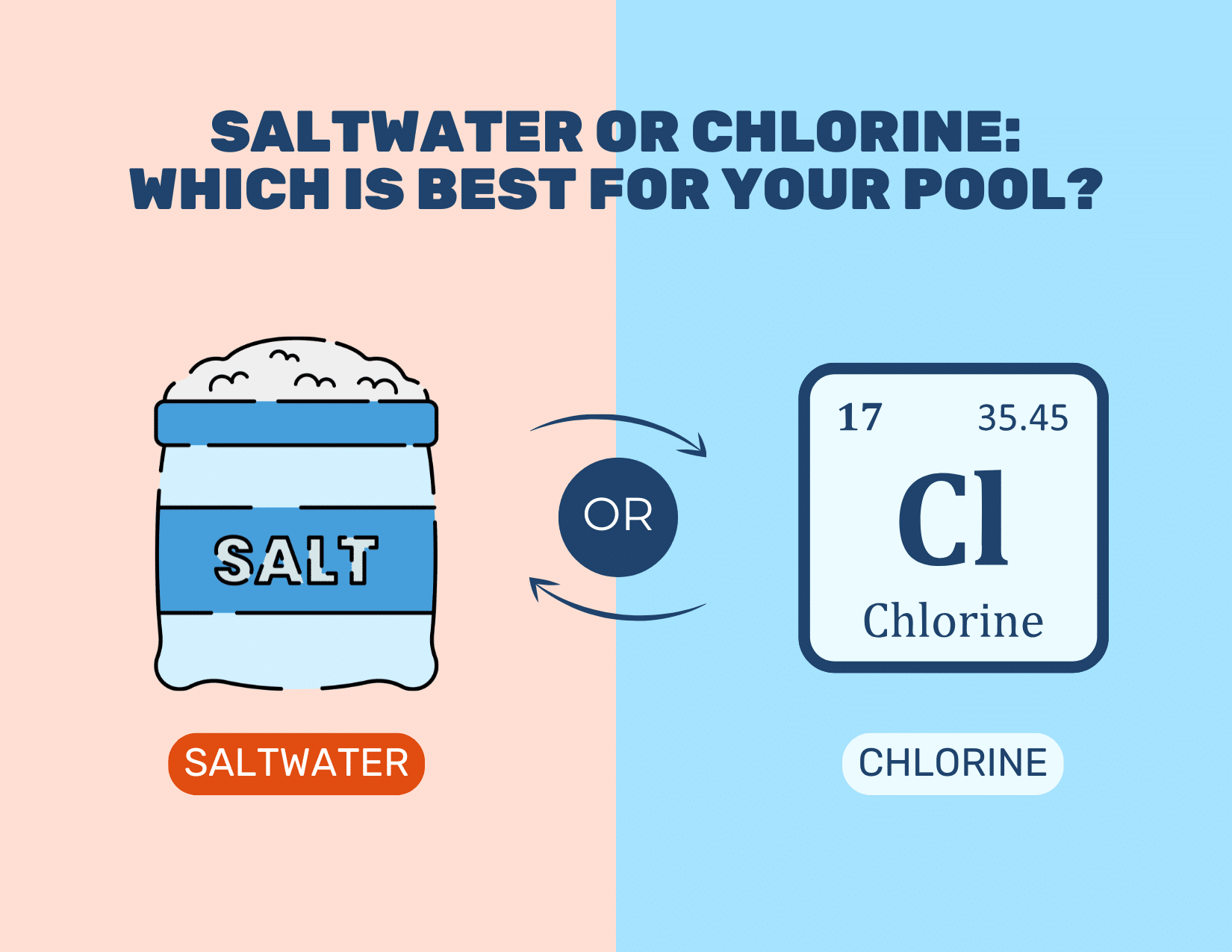 If you’re planning for a new pool or prepping for a resurfacing, now’s the perfect time to decide if you’re going to use chlorine or saltwater. The choice isn’t just about water feel, it can actually affect your pool’s finish, lifespan, equipment, and ongoing maintenance.
Here’s what you need to know to pick the system that works best for your pool surface, climate, and lifestyle.
How Saltwater And Chlorine Affect Your Pool’s Surface
Pools are a major investment—choosing the right system helps protect it for the long run. But without the right chemicals, your pool water can stain, etch or wear your surface down. It’s important to understand how saltwater and chlorine affect your surface differently.
Saltwater is mildly corrosive if chemistry isn’t balanced. Metals, stone coping, heaters, and handrails can degrade over time.
Chlorine’s fluctuating levels can etch plaster surfaces, fade pebble or quartz finishes, and leave mineral deposits.
Other equipment like pumps, heaters, slides, and lights can also experience wear based on your water chemistry. So choosing the right system helps prevent unnecessary repairs or premature surface replacement.
Saltwater Pros, Cons, and Maintenance Tips
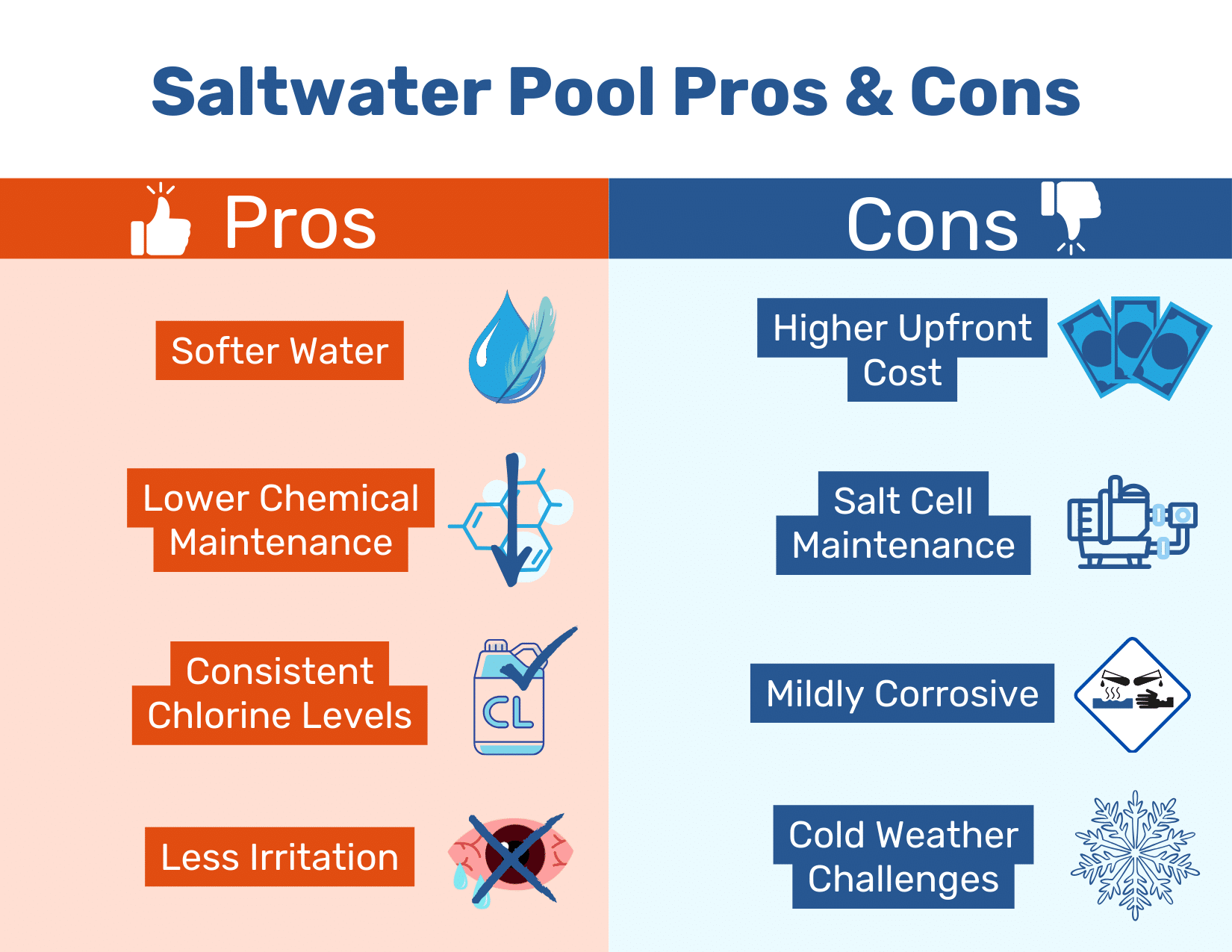
Saltwater pools are known for being a more natural option but they aren’t entirely chlorine-free. They actually produce chlorine on demand using a salt cell, but the water feels softer, and maintenance can feel less demanding.
Pros of a saltwater pool:
- Soft, gentle water: Silkier on skin, hair, eyes and swimsuits.
- Lower chemical maintenance: The salt cell continuously produces chlorine, meaning fewer spikes and dips. That also reduces surface etching from fluctuating chemical levels.
- Consistent chlorine levels: A more stable environment prevents algae growth and helps maintain surface integrity, especially on new finishes.
- Less irritation: Stable chlorine levels offer fewer skin or eye irritations, making it ideal for kids and frequent swimmers.
Cons of a saltwater pool:
- Higher upfront cost: Salt cells, control units, and installation run more than a basic chlorine setup.
- Salt cell maintenance: Cells accumulate calcium scale and need periodic cleaning, inspection, and replacement every 3–5 years.
- Mildly corrosive: Metals and stone surfaces can corrode over time if chemistry isn’t carefully monitored. Use stainless steel or coated metals to reduce risk.
- Cold weather challenges: Salt chlorinators slow down below ~50°F, meaning fall/winter chlorine production may stop or slow unless you add additional chlorine.
To keep your saltwater pool running smoothly, regular chemistry checks are a must. Small imbalances seem harmless, but over time they can speed up corrosion on coping, handrails, and heaters.
Chlorine Pros, Cons, and Maintenance Tips
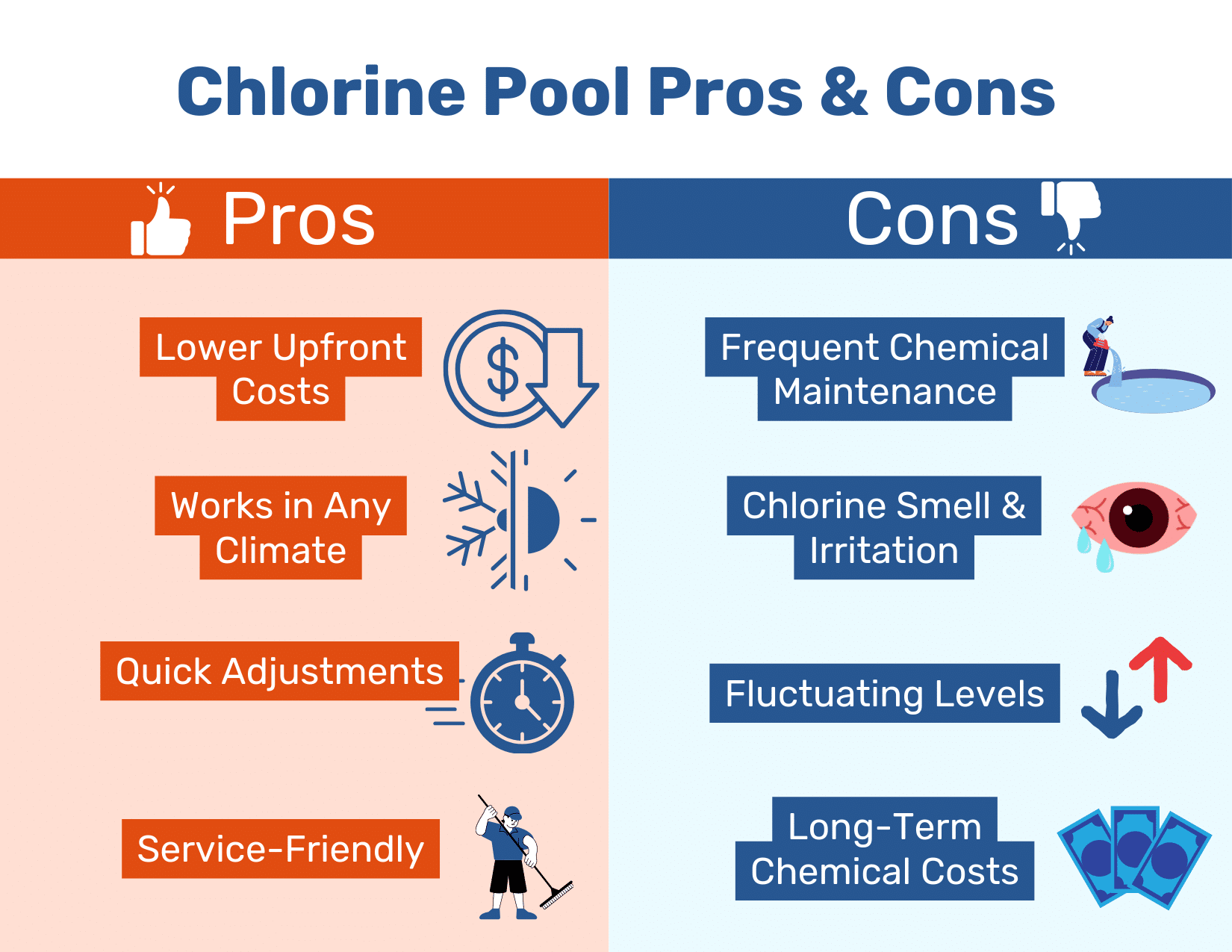
Chlorine pools are tried-and-true, but they come with their own maintenance quirks.
Pros of a chlorine pool:
- Lower upfront cost: Simple setup, fewer electronic components, and easier systems to install.
- Works in any climate: Cold or hot, it doesn’t matter, chlorine works year-round.
- Quick adjustments: Shocking or rebalancing your pool is straightforward with store-bought chemicals. This can save a newly refinished surface from damage caused by algae blooms.
- Service-friendly: Most pool technicians know chlorine systems, and chemicals are readily available.
Cons of a chlorine pool:
- Frequent chemical maintenance: Chlorine tabs, liquid, or shock need regular attention. Fluctuating levels can harm new plaster or aggregate finishes.
- Chlorine smell & irritation: The classic pool smell is actually chloramines, which can irritate skin and eyes.
- Fluctuating levels: Without constant monitoring, chlorine swings can cause surface staining, mineral buildup, or algae growth, especially on light-colored finishes.
- Long-term chemical costs: While the system is cheaper upfront, buying chlorine adds up over time.
The longevity of your pool surface really comes down to proper maintenance. Keep an eye on your chemical balance, because new plaster can etch or wear if pH or alkalinity get off balance.
Choosing A Pool Surface For Your Saltwater Or Chlorine Pool
A little attention goes a long way in keeping your pool looking flawless. When planning your new pool or renovation, it’s important to pick a pool surface and fixtures that can handle the type of water system you choose.
Here’s what works best for saltwater and chlorine pools (and what works with both):
For saltwater pools: Pebble, quartz or diamond brite finishes tend to hold up better than standard plaster. Choose coated metals and stainless fixtures. And keep your pool chemistry consistent to prevent etching or corrosion.
For chlorine pools: Standard plaster works fine, but be diligent with balancing chemicals. Avoid letting pH drop too low, which can accelerate wear.
Plaster and tile are both very versatile pool surfaces and work well with either system. INTER-GLASS® also works well with each system. Additionally, it uses less chemicals overall and will not deteriorate even if the water chemistry is out of balance.
The best way to protect your pool’s surface (and make maintenance easier) is by using automation and smart controllers. Especially for saltwater pools. These tools help you keep chemical levels consistent and your surfaces protected with way less work on your part.

Other considerations when choosing between a saltwater or chlorine pool:
- Budget: Saltwater has higher upfront costs but chlorine requires more long-term maintenance.
- Climate: If you plan to swim year round, cold weather may favor chlorine or supplemental systems.
- Lifestyle: Saltwater is ideal for kids, pets, sensitive skin, or frequent hosting because it is gentler on skin.
- Equipment longevity: Pumps, heaters, and slides also react differently to salt or chlorine. It’s important to think about other pool elements and fixtures.
Picking The Pool System That Works For You
There’s no universal “better” system, just the one that fits your pool surface, climate, and lifestyle.
Planning a new pool or pool renovation is the perfect opportunity to pair your water system with a surface finish that lasts, keeping your pool looking amazing for years.
Our team can help you choose the perfect surface finish to protect your investment and make your backyard a place you love to be.
All you have to do is click here to get your free pool resurfacing quote.