

Swimming pool cracks can be unsettling, especially when you’re not sure whether they’re just cosmetic or a sign of a more serious issue. Whether your pool is concrete, plaster, fiberglass, or vinyl-lined, visible cracks and tears can indicate anything from normal surface aging to deeper structural issues.
Many surface cracks are linked to aging or worn finishes, particularly in older pool plaster and cement surfaces. Fiberglass pools, while nonporous and flexible, can also develop hairline cracks or gelcoat blisters over time due to age, sun exposure, or improper installation. These can compromise both the appearance and water integrity if left unaddressed.
This guide breaks down the most common swimming pool cracks, explains how to identify them, and outlines the next steps. If you would rather skip the guesswork, start with our pool crack inspection and repair service for a proper assessment that identifies whether you are dealing with cosmetic damage or a structural pool crack.
What Causes Swimming Pool Cracks?
Most pool cracks happen for a few predictable reasons. Because pools are rigid structures sitting in a constantly shifting environment, even small ground movements can add up to real damage over time. However, the same underlying cause can produce different crack patterns depending on your pool type and how the soil behaves around it.
Surface and age‑related causes
Over time, surfaces lose flexibility and become more prone to damage from normal wear, cleaning, and water chemistry. Add in years of temperature changes like expanding in the heat, contracting in the cold, and it’s no surprise that aging surfaces start to show cracks, rough spots, or discoloration.
Plaster and cement surface shrinkage: Fresh plaster and cement-based finishes can develop fine hairline cracks or “crazing” if they cure too quickly or unevenly. Through regular use and aging, these surfaces naturally lose flexibility, making them more prone to cracking.
Fiberglass-specific surface wear: Fiberglass pools may develop hairline cracks, gelcoat blistering, or surface checking due to age, UV exposure, or long-term flexing of the shell. While these issues are often cosmetic at first, they can worsen if ignored.
Structural and environmental stress
More serious cracks are usually the result of external forces acting on the pool shell.
- Soil movement and settlement: Ground conditions shift significantly during heavy rain or prolonged drought, causing the soil beneath the pool to settle unevenly.
- Hydrostatic pressure: When groundwater levels rise, the water in the soil can exert massive pressure against the pool’s floor or walls, literally trying to lift or squeeze the shell.
- Construction or reinforcement issues: If the original construction involved poor soil compaction, inadequate drainage, or improper steel reinforcement placement, the pool is much more likely to crack under pressure.
Decoding Types of Swimming Pool Cracks
Not all cracks are equally serious. The goal is to figure out whether you are dealing with a surface issue or something that may affect the pool shell.
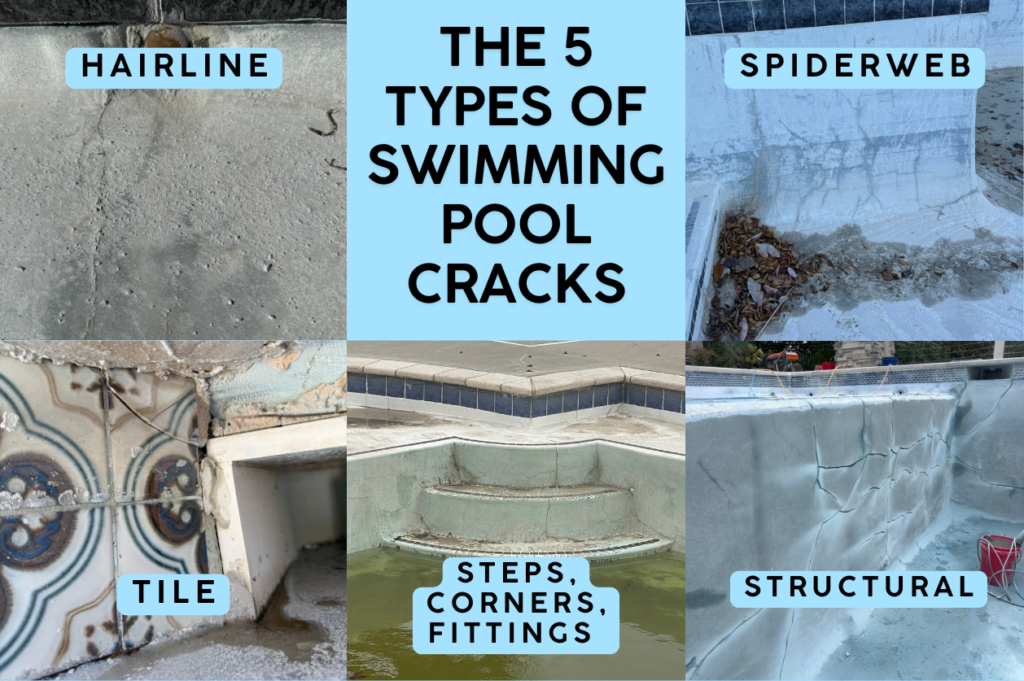
1) Hairline plaster cracks
This is the most common crack in pool plaster. It often looks like a thin line on the surface and may not leak. In fiberglass pools, similar surface cracks can form in the gelcoat layer from aging or surface stress.
You will usually see them:
- On the floor or walls in random directions
- Near steps, benches, and transitions
- In areas that get lots of sun or temperature swings
What it often means:
- Cosmetic wear in plaster or gelcoat
- Surface fatigue due to UV or water chemistry
- Early signs of aging or brittleness
What to do:
- Monitor for changes in width or length.
- Address water chemistry if it is out of balance.
- If the crack catches a fingernail or worsens, plan a repair to prevent water intrusion behind the finish.
2) Spider cracks or crazing
These look like a web of fine lines. They are common in older plaster and cement finishes and are usually surface-level. In fiberglass pools, they typically appear in the gelcoat and are caused by flexing, UV exposure, or age, not necessarily structural issues.
What it often means:
- Aged or chemically worn plaster
- Gelcoat surface stress in fiberglass
- Finish is nearing the end of its life
What to do:
- If there is no leak, focus on surface maintenance and plan pool resurfacing when the finish is near the end of its life.
- If you are seeing roughness, flaking, or discoloration alongside crazing, resurfacing may be the more cost-effective fix.
3) Tile line cracks
Cracks around the waterline tile in plaster pools can indicate movement because the tile line is a common stress zone. While tile is less commonly used in fiberglass pools, tiles applied decoratively to fiberglass can still crack due to adhesive failure.
You might notice:
- Cracks in grout
- Loose or popped tiles
- A crack running along the tile band
What it often means:
- Minor movement between materials
- Water infiltration behind tile due to aging grout
- In more serious cases, structural movement along the beam
What to do:
- Regrout and reseal if it is limited to grout lines.
- If tiles are popping off or the crack is widening, get an inspection to rule out structural issues. It might be time to repair the tile bed and replace all of the tile.
4) Cracks at corners, steps, and fittings
These cracks show up where different materials meet or where stress naturally concentrates. This typically happens around skimmers, lights, return jets, steps, and benches.
In plaster and concrete pools, this can indicate surface wear or minor movement.
In fiberglass pools, stress fractures may appear in the gelcoat near these areas due to shell flex or pressure from fittings.
These cracks often appear:
- At the inside corners of the pool
- Around skimmer throats
- Around light niches or return jets
- At step edges and benches
What it often means:
- Normal stress concentration, sometimes only in plaster
- Potential movement if cracks are wider, offset, or leaking
What to do:
- Treat small, stable cracks as plaster repairs.
- Treat widening, leaking, or displaced cracks as a priority inspection.
5) Structural pool cracks
A structural pool crack is the one you do not want to ignore. It may extend through the shell and can lead to leaks, ongoing movement, or safety issues. In concrete, they run through the shell. In fiberglass, signs may include deeper shell splits, flexing, or delamination, the separation of fiberglass layers.
Common indicators:
- The crack is wider than a typical hairline and continues to grow over time.
- There is vertical displacement, meaning one side sits higher than the other.
- You see staining, algae lines, or mineral deposits tracking along the crack.
- Water loss is consistent and exceeds normal evaporation.
- The crack runs in long, continuous paths, especially in straight lines.
What to do:
- Arrange a professional diagnosis before patching.
- Avoid quick DIY sealants that hide symptoms without addressing the cause.
- If confirmed structural, repairs may involve epoxy injection, stitching, reinforcement, or localized rebuilding, depending on severity.
Quick Diagnosis Guide
Use this table to help organize what you’re seeing before you call in a pro. Clear details speed up diagnosis and ensure you get the right fix faster.
| What You Notice | Likely Type | Leak Risk | What to Do First |
| Thin, hairline crack on surface (plaster or gelcoat) | Surface fatigue (plaster or fiberglass gelcoat) | Low | Mark ends, take photos, monitor for 2–4 weeks |
| Web-like fine cracks in one area | Crazing or spider cracks (plaster or fiberglass gelcoat) | Low | Check water chemistry; plan resurfacing if widespread |
| Crack with scale, stains, or algae line | Possible deeper crack through the shell | Medium | Perform a bucket test (see information below) and schedule an inspection |
| Cracks near skimmers, lights, returns, or molded steps | Stress-point cracking (all pool types) | Medium | Check for movement, monitor for leaks, and arrange assessment if needed |
| Crack that widens, shifts, or has one side raised | Structural pool crack (plaster, concrete, or fiberglass) | High | Book a professional structural evaluation immediately |
| Water level consistently drops to same point | Leak at a specific elevation (any pool type) | High | Note the stop point, run a bucket test, and schedule leak detection |
What To Do When You Find a Crack
Start with a simple, structured approach. The goal is to document, check for leakage, and avoid making the problem harder to diagnose.
Step 1: Document the crack
Take photos from multiple angles and include something for scale, like a coin. Measure the length and approximate width, then note the location.
Helpful notes to record:
- Date noticed
- Location (wall, floor, step, tile line)
- Length and widest point
- Whether you see staining or roughness
Step 2: Check for water loss with a bucket test
Some water loss is normal, especially in heat, due to evaporation. If you suspect a leak, do a bucket test.
Bucket test basics:
- Fill a bucket and place it on a pool step so the water inside matches the pool level outside.
- Mark both waterlines and leave for 24 hours.
- If the pool drops more than the bucket, you may have a leak.
If you find a leak pattern, this is where professional help saves you money.
Step 3: Avoid quick patches until you know the type
It is tempting to seal everything immediately. That can trap water behind surfaces or hide a structural issue that keeps progressing.
Avoid:
- Smearing sealant over long cracks without diagnosis
- Draining the pool without professional advice, especially in high groundwater areas
- Chipping plaster aggressively, which can enlarge the repair zone
When a Crack is Urgent
Some cracks can wait for monitoring, while others should be assessed quickly.
Get a professional inspection sooner if:
- The crack is widening week to week.
- There is a visible step, offset, or heave along the crack line.
- You are topping up water frequently.
- You see rust staining, persistent algae growth along the crack, or hollow-sounding plaster nearby.
- Multiple cracks appear suddenly after heavy rain, earthworks nearby, or a long dry period.
How to Prevent Swimming Pool Cracks
You cannot prevent every crack, but you can reduce the likelihood of major cracking and catch issues early.
Good prevention habits:
- Keep water chemistry balanced to reduce plaster wear and brittleness, including maintaining a proper LSI (Langelier Saturation Index).
- Maintain consistent water levels, especially during hot weather.
- Ensure the deck and surrounding drainage routes water away from the pool.
- Schedule periodic inspections, especially for older pools.
- Address small grout and tile failures early to prevent water intrusion.
Fix Cracks Early, Protect Your Pool Long-Term
Swimming pool cracks range from harmless hairlines to signs of deeper structural problems. A crack in pool plaster or fiberglass may only need a surface repair, but a structural pool crack can worsen quickly if movement or pressure is not addressed. Document what you see, check for unusual water loss, and avoid quick patches until you know what you are dealing with.
With years of experience restoring and repairing pools across the nation, Mid-America Pool Renovation understands how to properly diagnose both cosmetic and structural cracking. If you want a clear answer and a repair plan that actually lasts, call us now, and we will help you confirm the cause, the severity, and the right fix for your pool. Don’t wait until the damage worsens.
