

A swimming pool is more than just a feature; it’s a focal point for relaxation, recreation, and community. Whether it’s the heart of a backyard retreat or the centerpiece of a public aquatic center, a beautiful pool elevates the entire experience. However, like anything in life, time takes its toll. Things like UV rays, chemicals, and weather extremes may seem harmless on a day-to-day basis, but they cause even the most durable pools to lose their sparkle.
If your pool’s floor has started to feel like a cheese grater against your feet, or if you’ve noticed unsightly stains that no amount of scrubbing can remove, you are likely facing a major pool renovation milestone. Understanding the pool resurfacing process and the associated pool resurfacing cost is the first step toward reclaiming your backyard oasis. This guide is designed to walk you through every technical and financial aspect of the project so you can plan with confidence.
When Is It Time to Resurface Your Pool?
Most pools need a fresh surface every 7 to 15 years, depending on the material, usage, and how well the water has been maintained. It’s more than just a cosmetic fix; it’s about protecting the “bones” of your pool.
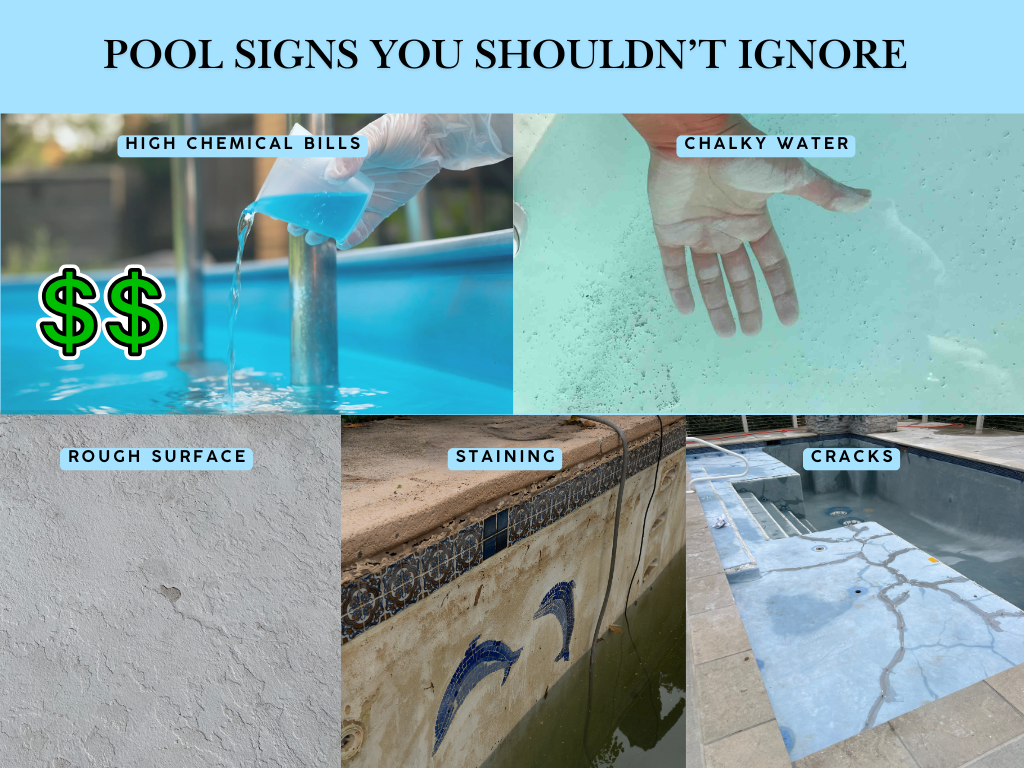
Signs You Shouldn’t Ignore
- Rough Texture: If the pool floor feels abrasive or catches on swimsuits, the protective top layer has likely worn away, an early sign that it’s time to resurface.
- Stains That Won’t Budge: Deep mineral or algae stains often mean the surface has become too porous.
- Chalky Water: If you rub the wall and a white cloud of “dust” comes off, the finish is literally dissolving.
- Cracks: Small spiderweb cracks are common, but deep fissures mean water is leaking into the concrete shell.
- High Chemical Bills: If you’re constantly fighting to keep your pH in check, your old plaster might be “reacting” with the water.
The Professional Pool Resurfacing Process
Pool resurfacing isn’t a quick weekend DIY, it’s a serious renovation project that demands expert planning and precise execution. Proper surface preparation in particular can make or break a long-lasting result. Cutting corners here is one of the biggest reasons resurfacing fails early. On average, the process takes 5 to 14 days, depending on weather and pool complexity.
1. Drainage and Safety Preparation
The project begins with a high-volume submersible pump. However, draining a pool is the most dangerous phase for the structure. If the groundwater table is high, an empty pool can actually lift out of the ground—a phenomenon known as “popping.” Professionals monitor the weather and use hydrostatic relief valves to ensure the pressure remains equalized while the pool is empty.
2. Hydro-Blasting Surface Prep
To ensure lasting adhesion, we utilize advanced hydro-blasting at 40,000 PSI to remove old plaster, coatings, and soft materials, leaving clean concrete. The result is a jagged surface profile that bonds better than sandblasting and sets the stage for long-lasting finishes.
3. Structural Assessment & Crack Evaluation
With the pool shell fully exposed, our technicians inspect for structural concerns that may have been hidden beneath the surface. If deep fissures or cracks are found, they are typically filled with high-strength epoxy and may be reinforced using carbon fiber staples or mesh to restore integrity and prevent future movement.
4. Applying the New Finish
This is the “art” phase of the pool resurfacing. Whether you have chosen standard white plaster, a quartz aggregate, or a premium pebble finish, the material is mixed on-site and pumped into the pool. A crew of craftsmen then hand-trowel the material across the floor and walls. This requires immense skill to ensure the surface is well-bonded and expertly hand-troweled.
For pool owners seeking maximum longevity and low maintenance, Mid-America also offers INTER‑GLASS® a proprietary composite resurfacing system engineered to outperform traditional materials.
5. The Typical 28-Day Cure vs. INTERGLASS®
After traditional finishes are applied and washed (for aggregate finishes), typically with acid, the pool is immediately refilled. The first month is the most critical time in the pool’s life. As the cement cures underwater, the water chemistry must be tested daily. You or your pool professional will need to brush the walls twice a day to remove “plaster dust” and ensure the finish sets without permanent staining or scaling.
INTER‑GLASS® cures the wait time blues. Unlike the above, INTER‑GLASS® does not require a 28‑day underwater cure or daily brushing. Once installed, the pool simply needs to remain empty for 3–5 days to allow the composite layers to set and bond properly to the pool shell. This eliminates the prolonged chemistry monitoring and work that plaster demands, and you don’t have to brush the surface to remove plaster dust that doesn’t exist with a non‑cementitious composite finish.
Pool Resurfacing Cost Considerations
Plaster Pool Resurfacing Cost Considerations
Plaster is often the go-to material for initial pool construction or basic resurfacing jobs. It’s affordable and familiar, but not always the best long-term investment.
Residential Considerations
For homeowners, plaster can be a cost-friendly way to refresh a tired pool, especially if you’re working within a budget. But it does require diligence: expect more frequent maintenance and resurfacing every 5-12 years. If you’re already juggling yard work and weekend plans, this might not be the lowest-lift option.
Commercial Considerations
In commercial settings, plaster can wear out fast. Heavy foot traffic, extended hours of operation, and higher chemical loads shorten its lifespan to about 5 years or less. While it keeps costs low in the short term, frequent resurfacing and downtime can add up quickly.
What to Consider:
- Shorter service life, especially under heavy use
- Requires careful water chemistry to prevent etching and stains
- Lowest upfront material cost, but may cost more long-term
- Best for: budget-conscious projects with regular maintenance plans
Aggregate & Cement Pool Resurfacing Cost Considerations
Aggregate blends add aesthetics and sophistication to your pool’s interior. These finishes mix durable materials like quartz, pebble, or a performance cement + aggregate mix for enhanced performance and style. Though more expensive initially, they require less upkeep and offer better long-term value.
Residential Considerations
Homeowners looking for something more visually refined (and less hands-on) will appreciate the durability and beauty of aggregate finishes. Whether you want a sparkling quartz finish or a textured pebble look, these surfaces last 10–15 years and resist algae and chemical staining far better than plaster.
Commercial Considerations
For commercial and municipal pools, aggregate is often the smarter long-term play. It stands up to daily wear, varying pH levels, and rougher use. Lower maintenance needs mean fewer closures for cleaning or resurfacing, keeping your facility up and running.
What to Consider:
- Longer lifespan reduces replacement frequency
- Lower maintenance costs over time
- Greater stain and etch resistance
- Best for: mid-to-high-end residential and high-traffic commercial projects
INTER‑GLASS® Pool Resurfacing for Those Who Think Long Term
INTER‑GLASS® is Mid‑America’s proprietary composite pool finish designed for long-term performance and minimal maintenance. Unlike plaster or aggregate, it’s a non‑porous, multi‑layered system that resists cracking, staining, and chemical damage—even in freeze-thaw climates.
Residential Use
Ideal for homeowners tired of resurfacing every 5–10 years, INTER‑GLASS® delivers a smooth, algae-resistant finish that stays clean and bright with minimal effort. It’s compatible with a wide range of pool structures, including older concrete, fiberglass, and panel walls.
Why homeowners love it:
- Ultra low maintenance
- Non-porous and smooth underfoot
- Durable enough to go decades without replacement
- Backed by a 25-year limited warranty for long-term performance
Commercial & Municipal Use
For heavy-use facilities, INTER‑GLASS® offers exceptional value over time. Its bonded, flexible surface resists delamination and chemical erosion, making it ideal for resorts, aquatic centers, schools, and city pools.
Why operators choose it:
- Long service life under high bather loads
- Fewer resurfacing cycles
- Better water chemistry stability
- Designed for high-demand environments
- Protected by a 25-year limited warranty
Protecting Your Investment: The Role of Water Chemistry
Once you have spent thousands on a beautiful new finish, the last thing you want to do is ruin it with poor maintenance. The longevity of your pool surface is directly tied to the Langelier Saturation Index (LSI).
If your water is “hungry” (low LSI), it will literally leach calcium out of your new plaster to balance itself, leading to pitting and roughness. If the water is “oversaturated” (high LSI), you will see ugly, sandpaper-like scale build up on the walls. Keeping your pH, alkalinity, and calcium hardness in check isn’t just about clear water; it’s about protecting your financial investment.
Enhancing the Total Backyard Experience
While focusing on the pool resurfacing process, many homeowners realize that a beautiful new pool interior makes an old, cracked pool deck look even worse. This is the ideal time to consider deck resurfacing to ensure your entire outdoor space feels refreshed.
At Mid-America Pool Renovation, we exclusively use Texture-Dek, a premier architectural coating designed for the rigorous pool environment. Unlike generic overlays, Texture-Dek offers:
- Heat Reduction: Stays cool under the sun for barefoot comfort.
- Slip Resistance: Provides a textured, non-skid surface for added safety.
- Custom Aesthetics: Available in various colors to match your new pool finish.
- High Durability: Resists staining, UV damage, and heavy foot traffic.
Completing your pool and deck projects simultaneously often reduces total labor costs and ensures your backyard looks brand new from the water to the back door.
Why Professional Expertise Matters
Going with the lowest bid can sometimes backfire, especially with something as complex as pool resurfacing. This is not just a cosmetic upgrade. The pool resurfacing process is technical and depends on thorough preparation, the right conditions, and experienced craftsmanship.
At Mid-America Pool Renovation, we manage every detail that affects long-term performance, from surface profiling and structural repairs to how each finish is mixed and applied. When the work is done right, your new surface stays strong, looks great, and performs as intended for years. It is also worth noting that many premium finishes are only covered by warranty when installed by a certified professional, making expertise just as important as materials.
Ready for Pool Restoration?
A pool resurfacing project is a significant undertaking, but it is one of the most rewarding improvements you can make. By understanding the pool resurfacing process and cost, you transform a source of stress into a source of pride. You aren’t just buying plaster and pebbles; you are buying another twenty years of summer afternoons, family gatherings, and peaceful swims.
Ready to start your transformation? Mid-America Pool Renovation is here to guide you through selecting the perfect material for your lifestyle and providing a transparent quote that fits your budget.
